Baby Food & Nutrition

6 Month Baby Food Chart: First Solids & Easy Recipes

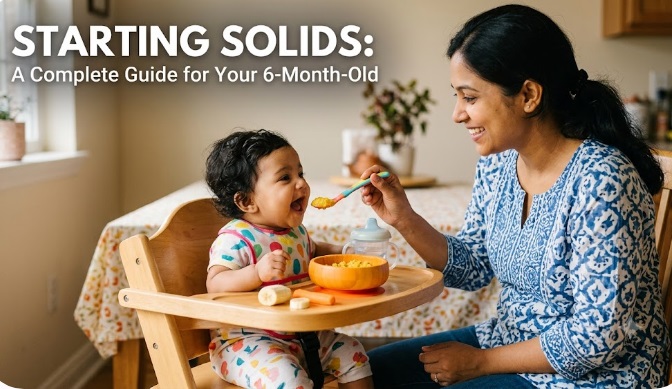
6 Month Baby Food Chart : If you are wondering how to safely introduce solids to your infant, this beginner-friendly guide and food chart will make the journey stress-free.

Signs Your Baby is Ready for Solids

6 month baby food chart and healthy purees

Before putting that first spoon in their mouth, ensure your baby is ready. Look for these signs:

  • Your baby can sit up straight with little to no support.
  • They have good neck control and can hold their head steady.
  • They show interest in what you are eating (watching your plate or reaching for food).
  • The “tongue-thrust reflex” (pushing food out of the mouth automatically) has disappeared.

Golden Rules for Introducing First Foods

  • The 3-Day Rule: Introduce only one new food at a time and wait for 3 days before introducing another. This helps you track any allergic reactions like rashes, vomiting, or diarrhea.
  • Start Small: Begin with just 1 or 2 teaspoons once a day. Gradually increase the quantity based on your baby’s appetite.
  • Keep it Smooth: At 6 months, the food must be completely pureed, smooth, and free of any lumps to prevent choking.
  • Never Force Feed: Feeding should be a fun and positive experience. If your baby turns away, do not force them.

Best 6 Month Baby Food List

Here are the safest and most nutritious single-ingredient foods to start with:

  1. Fruit Purees:
    • Banana: Naturally sweet, soft, and easy to mash without cooking.
    • Apple or Pear: Needs to be peeled, steamed until soft, and pureed smoothly.
  2. Vegetable Purees:
    • Sweet Potato or Pumpkin: Rich in vitamins and naturally sweet, making them a baby favorite.
    • Carrot: Easily digestible when steamed and pureed.
  3. Single-Grain Cereals:
    • Rice or Oatmeal Cereal: Mix it with a little breast milk or formula to create a familiar taste.

Quick & Healthy Recipes for Beginners

1. Creamy Apple Puree
  • Ingredients: 1 apple.
  • Method: Peel and core the apple, then cut it into small cubes. Steam the cubes for 10 minutes until completely soft. Blend or mash into a smooth paste. Add a little breast milk if it is too thick.
2. Simple Mashed Banana
  • Ingredients: Half a ripe banana.
  • Method: Peel the banana and use a fork to mash it thoroughly in a clean bowl until no lumps remain. Serve immediately.

Foods to Avoid Safely

  • Honey: Never give honey to a baby under 1 year, as it can cause infant botulism (a serious illness).
  • Salt and Sugar: A baby’s kidneys are too delicate for added salt, and sugar can cause early tooth decay. Keep meals completely natural.
  • Cow’s Milk: Stick strictly to breast milk or formula, as cow’s milk is difficult for a 6-month-old to digest.

Conclusion

Introducing solids is a gradual process of exploration for your baby. Do not worry about how much they eat right now; focus on introducing them to new tastes and textures. Keep nursing or formula feeding as usual, and enjoy this beautiful milestone!

Starting Solids After 6 Months: What to Feed Your Baby and How to Start

​For the first 6 months of life, exclusive breastfeeding is more than enough to meet all of your baby’s nutritional needs. However, as your baby crosses the 6-month milestone and enters their 7th month, their rapidly growing body requires complementary foods alongside breast milk. In medical terms, this transition is known as complementary feeding, or more commonly, introducing solids.

​For new parents, introducing the first solid food often brings a mix of excitement, fear, and hesitation: What should I feed them? How do I feed them? Will it upset their tummy?

​In today’s guide, we will break down the correct, safe, and stress-free rules for starting your baby’s journey into the world of solid foods.

​Is Your Baby Ready for Solids? Look for These Signs

​Instead of rushing to feed your baby exactly on their 6-month birthday, look for these physical developmental signs:

  • ​Sitting Up: Your baby can sit upright with little to no support.
  • ​Head Control: Their neck is strong, and they can hold their head steady and control its movement.
  • ​Curiosity: They show a keen interest in food (e.g., staring intently when adults eat or reaching for your plate).
  • ​Reflexes: The tongue-thrust reflex (automatically pushing food out of the mouth with the tongue) has diminished.

​What Foods Should You Start With?

​In the beginning, avoid heavy or complex meals made with multiple ingredients. Stick to single-ingredient foods that are easily digestible and smooth in texture.

​1. Single-Grain Cereals

​You can start with a thin, smooth porridge (puree) made from homemade rice flour or suji. It is gentle on the stomach and rarely causes allergic reactions.

​2. Vegetable Purees

​Steamed and finely mashed or pureed vegetables are excellent starters. Great options include:

  • ​Sweet Potato
  • ​Sweet Pumpkin
  • ​Carrots or Ripe Papaya

​3. Fruit Purees

​Fruits are naturally sweet and soft, making them an instant hit with babies.

  • ​Banana: Thoroughly mashed with a fork.
  • ​Apple or Pear: Slightly steamed to soften, then blended or finely mashed.
  • ​Quantity: Do not expect your baby to finish a whole bowl. Start with just 1 to 2 teaspoons per feeding. The goal right now is practice, not volume.
  • ​Frequency: Offer solid food just once a day initially. It is best to do this in the morning or early afternoon so you have the entire day to monitor them for any digestive issues.
  • ​The Main Source: Remember, even after introducing solids, breast milk or formula remains your baby’s primary source of nutrition and calories until their first birthday.
  • ​Never Force Feed: If your baby turns their head away, closes their mouth, or cries, stop feeding them. Eating should never feel like a punishment.
  • ​Food Consistency: The food should not be as watery as liquid milk, nor should it be too thick or solid. Aim for a semi-solid, smooth puree consistency that drops slowly when you tilt the spoon.
  • ​Hygiene is Key: Always thoroughly wash your hands and sterilize the baby’s feeding bowls, spoons, and cooking utensils before preparing meals.
  • ​Absolutely No Honey: Never give honey to a baby under 1 year of age. Honey can contain spores of a bacteria that cause infant botulism, a rare but serious and potentially life-threatening illness.